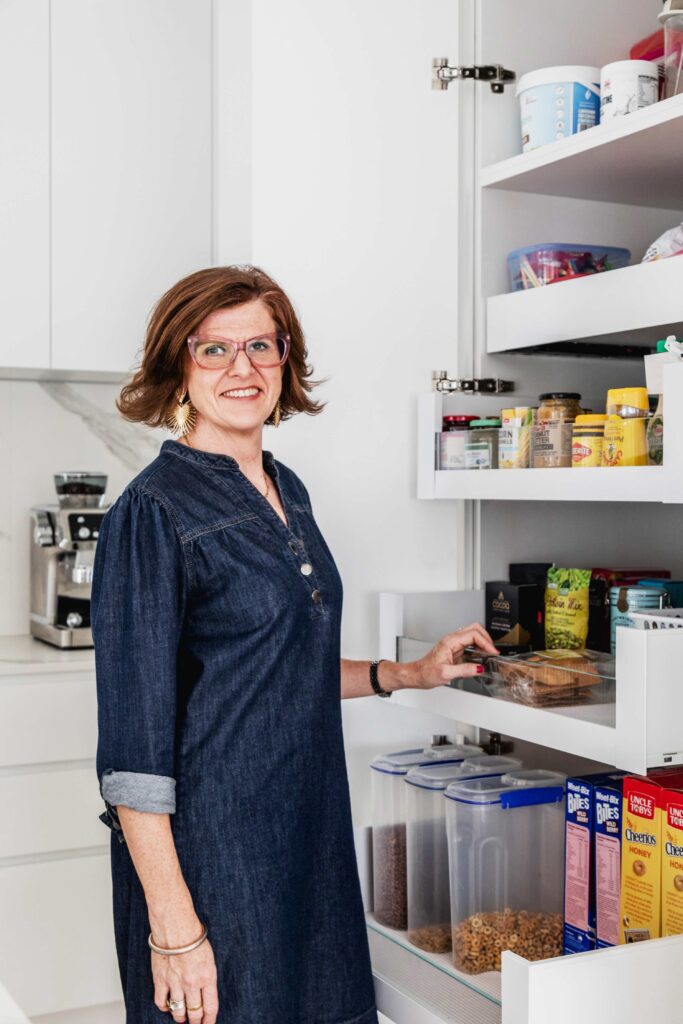
As kitchens have evolved over time, the humble kitchen pantry has now become an almost indispensable addition and turned into a Walk-in or Butler’s pantry. There are several types of kitchen pantries available and the right one for you will largely depend on your floorplan and the available space you have in the kitchen, plus what you need, how you cook and what you need to store.
Here are a few types of pantries to help you figure out which one will suit you best;
Butler’s Pantry
Originally, a butler’s pantry was a separate space used to store valuable serving ware, fine china and household items. Today, it has evolved into a highly functional extension of the kitchen, providing additional space for food preparation, storage and entertaining.
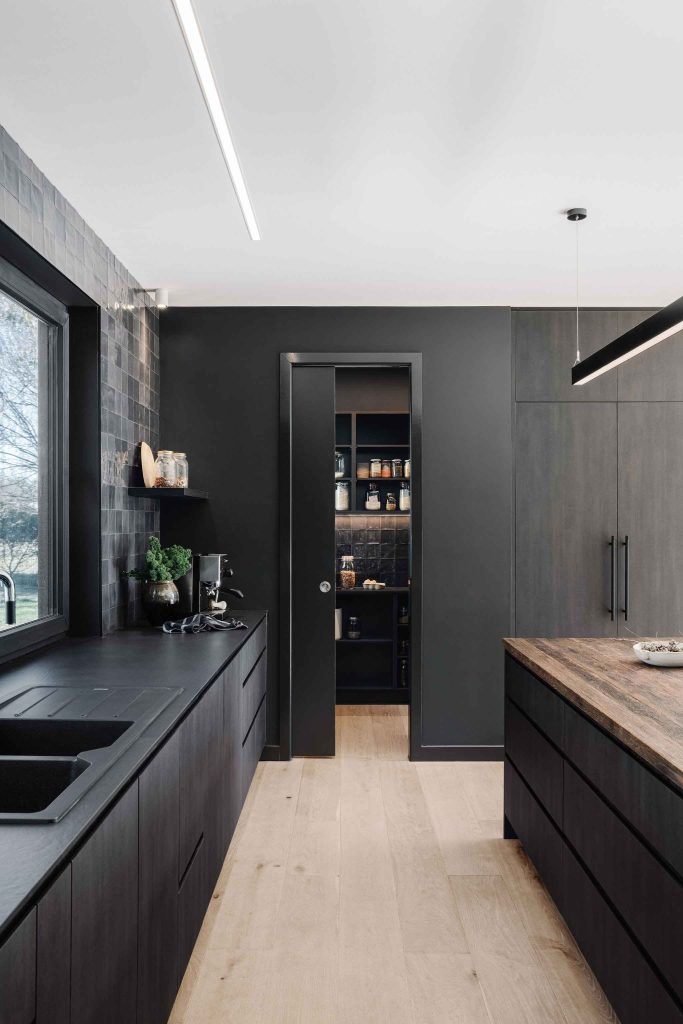
A modern butler’s pantry often includes extra bench space, a sink, and depending on your needs, may also accommodate a dishwasher, oven or second fridge. For some homeowners, it also serves as a secondary kitchen, helping to keep cooking mess, noise and strong food odours away from the main living areas.
Whether a butler’s pantry is the right choice ultimately depends on how you cook, entertain and use your kitchen. When designed well, it can improve workflow, increase storage and make everyday living much more functional.
Walk-in-Pantry
A walk-in pantry is a place to store non-perishable food items along with small appliances such as a coffee machine, mix masters, blenders, and microwaves. Incorporating a breakfast bar in a Walk in Pantry is also a consideration for many.
Unlike the butler’s pantry, a walk-in- pantry doesn’t have a sink, but you may add a secondary fridge in it.
Traditional Pantry
This can be configured in many different ways, but is ultimately a space that is not walk-in. It could be a pull-out system, a drawer system, corner pantry, or a large cupboard. When space is tight in smaller kitchens, the design is even more critical to ensure you’re able to maximise space as much as possible.
Appliance Cupboard
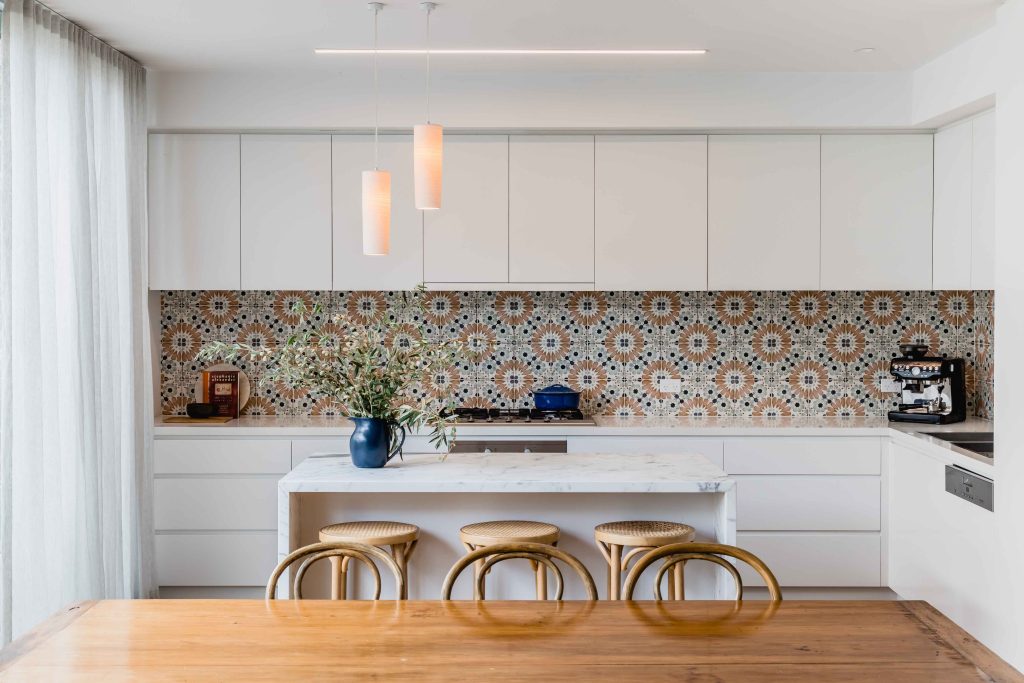
An appliance cupboard can be used instead of a walk-in pantry to store appliances when space is tight. It sits on a bench and is designed at bench height. It can be combined with your overall pantry space so you have food storage and an area for appliances in one. An appliance cupboard can be designed behind a roller door, bi-fold doors, retractable doors or normal hinged doors.
Step-in Pantry
To make good use of corners, we often design what we call a Step-in pantry. It creates the illusion of a walk-in pantry and gives a bit of bench space where you can place your appliances, and also stores your food. It maximises space and makes good use of tricky corners.
Pull out Pantries
Pull out pantries were popular in the 90’s. The downside with pull out pantries is the lack of access to items that are hidden at the back, and the sides are not always high enough to store tall bottles and items tend to fall over.